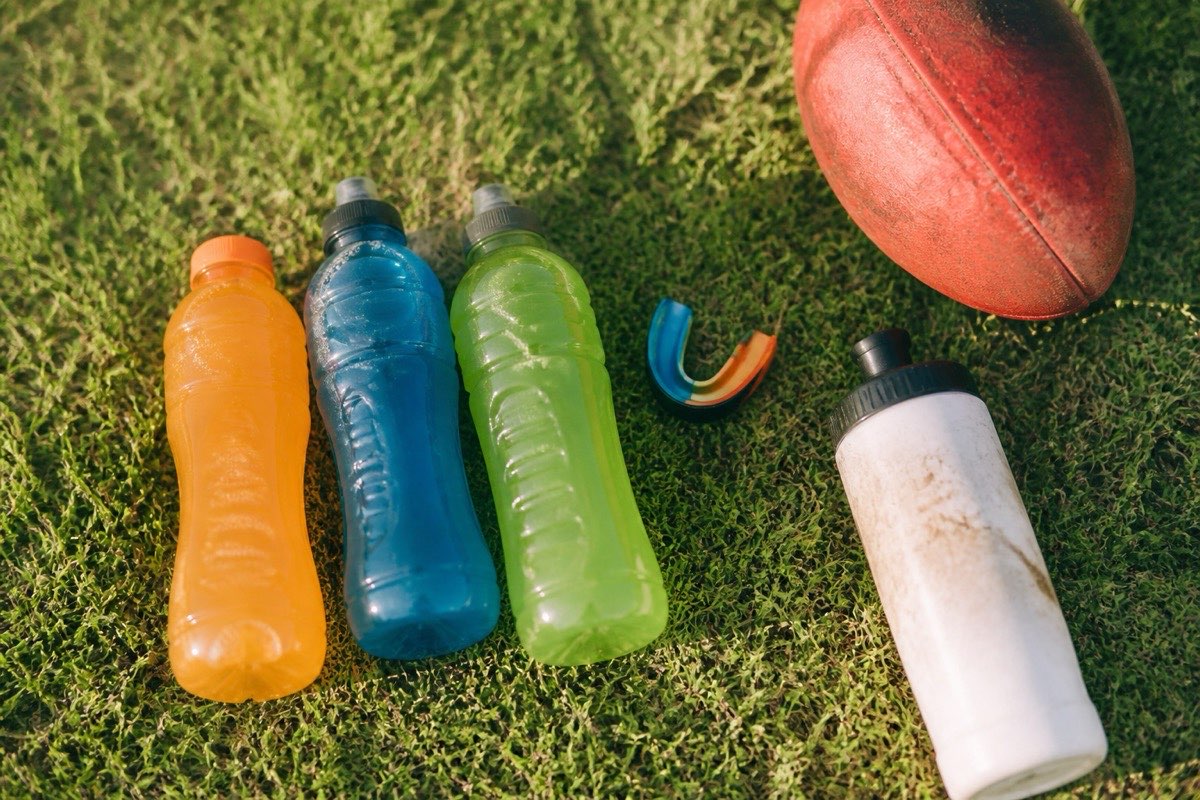
Saturday mornings in Blackburn run on a pretty predictable script. Drop the kids at footy training at Blackburn Junior Football Club. Watch them tear around the oval at Morton Park. Hand them a drink at quarter time. Pick up some groceries while they’re at cricket practice at Blackburn Cricket Club. Maybe squeeze in a coffee while the younger one is at soccer with NewHope FC.
Somewhere in all of that, a brightly coloured sports drink gets cracked open — and from a dental perspective, that’s where things get interesting.
What sports drinks actually do to teeth
I want to be clear: I’m not here to demonise any particular brand or tell you your child can never have a Gatorade again. What I want parents to understand is the mechanism — because once you understand how erosion works, the practical changes are straightforward.
Sports drinks are designed to replace electrolytes. To do that, they contain citric acid, which gives them that sharp, slightly sour taste. The pH of most sports drinks sits between 2.4 and 3.5. For reference, water is 7 (neutral) and battery acid is about 1.
Tooth enamel — the hard outer shell that protects the tooth — starts to soften at a pH below 5.5. So every time a sports drink washes across the teeth, it temporarily softens the enamel surface. If that happens once, it’s nothing. Saliva buffers the acid and remineralises the enamel within about 30 minutes.
The problem is frequency. A child who sips a sports drink over an hour at training, takes another bottle to the afternoon game, and has a third one at home because they liked the taste — that child’s enamel is spending hours in a softened state, day after day, week after week.
Over time, the enamel thins. The teeth start to look glassy or translucent at the edges. The biting surfaces flatten. The underlying dentine — which is yellow — starts to show through. And because this happens gradually, most parents don’t notice until the damage is well established.
It’s not just sports drinks
While sports drinks get the most attention, they’re not the only culprits. Fruit juices, cordials, flavoured waters, soft drinks, and even some kombucha products sit in the same acidic range. Energy drinks are particularly aggressive — they combine high acidity with high sugar.
The common thread is acidity, not sugar. A sugar-free sports drink still erodes enamel because the acid is doing the damage. Sugar adds a separate risk (decay from bacteria feeding on it), but erosion is a chemical process between acid and tooth structure.
What I see in practice
I see erosion regularly in children across the Whitehorse area, and the pattern is remarkably consistent: active kids, good families, decent brushing habits, but a blind spot around what they’re drinking. The teeth look healthy at a glance — no obvious holes, no pain. But when I check the biting surfaces under magnification, the enamel is visibly thinning.
This is exactly why our check-up and clean appointments include a close examination of every tooth surface, not just a quick look for cavities. Erosion is easy to miss if you’re not specifically looking for it.
The timing trap
Here’s the part that catches most parents off guard: brushing straight after an acidic drink makes things worse.
When enamel is softened by acid, brushing it — even gently — physically scrubs away the softened surface layer. It’s like sanding wet wood. The enamel needs time to reharden first.
The practical rule: wait at least 30 minutes after an acidic drink before brushing. In the meantime, rinsing with plain water helps. Drinking water alongside or after the sports drink dilutes the acid and stimulates saliva, which is the mouth’s natural defence.
What you can do (realistic version)
I’m a parent in this community too. I know that telling a sweaty 10-year-old to drink plain water after a hard game isn’t always going to land. So here’s the realistic approach:
At training and games:
- Water is the default drink. For most junior sport, plain water is all that’s needed — kids aren’t losing enough electrolytes to require replacement drinks
- If they do have a sports drink, encourage them to drink it quickly rather than sipping over a long period. One big exposure is less damaging than many small ones
- Follow it with water to rinse the mouth
At home:
- Keep sports drinks as an occasional thing, not a fridge staple
- Check the labels on “healthy” drinks — many fruit juices and flavoured waters are just as acidic
- Melbourne’s fluoridated tap water is genuinely one of the best things for your child’s teeth. It’s been fluoridated since 1977, and the fluoride helps remineralise enamel throughout the day
At dental visits:
- Mention what your child drinks regularly — it changes our risk assessment
- We can apply fluoride varnish to strengthen enamel that’s starting to show early signs of wear
- For children with new adult molars coming through, fissure sealants protect the deep grooves on the chewing surfaces where decay starts most easily
When erosion has already started
If we catch erosion early — and that’s the whole point of regular six-monthly visits — there’s a lot we can do before it becomes a bigger problem.
For early-stage damage, we might recommend more frequent fluoride applications, dietary adjustments, and a watch-and-monitor approach. The goal is to stop the erosion progressing and let the tooth’s natural repair processes work.
For children where decay has developed alongside the erosion, we have minimally invasive options that don’t involve the drill. Silver diamine fluoride (SDF) can arrest decay in its tracks, and glass ionomer restorations release fluoride over time to help protect the surrounding tooth structure. These approaches are particularly good for anxious kids or younger children who struggle to sit still for traditional treatment.
The bigger picture
This isn’t about guilt-tripping anyone over a sports drink. It’s about awareness. Most parents I talk to in Blackburn and across the Whitehorse area had no idea that sports drinks could be doing this kind of damage — because the marketing positions them as healthy, athletic, performance-enhancing.
Once you know what’s happening, the changes are small: more water, less sipping, wait before brushing. That’s it. No overhaul required.
And if it’s been a while since your child’s last check-up, or you’re noticing their teeth looking a bit more translucent than they used to, bring them in. We’d rather catch it early and monitor it than wait until the enamel is gone — because once enamel is lost, it doesn’t grow back.
We’re at 129A Canterbury Road, Blackburn — a short walk from Blackburn Station. You can book online or call us on (03) 8838 8820.