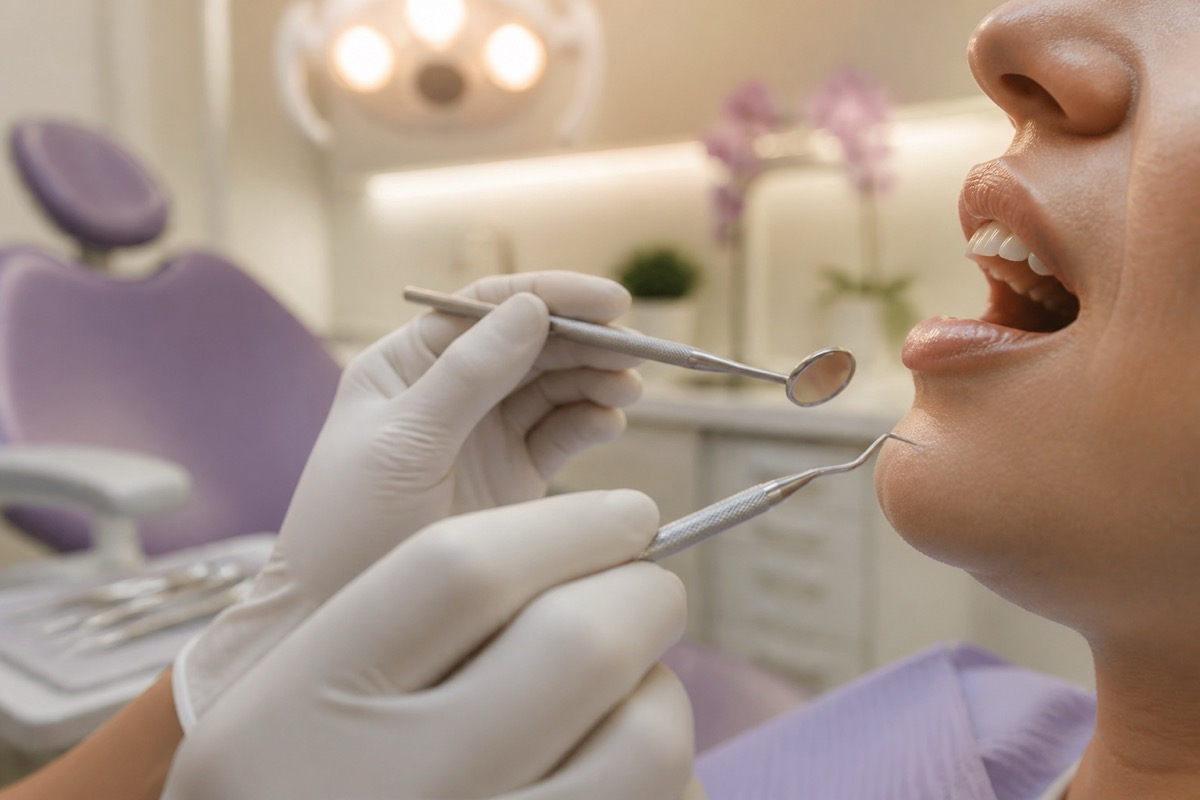
Most people assume a dental check-up and clean is a quick in-and-out affair. Open wide, have a poke around, scrape off some tartar, done in fifteen minutes. And honestly, at some practices, that’s exactly how it works.
That’s not how we do it. Here’s what actually happens — and why each part matters.
The conversation comes first
Before anyone picks up an instrument, we talk. If it’s your first visit, this conversation is longer (I’ve written about that separately). But even for returning patients, we check in.
Has anything changed since your last visit? New medications? Any sensitivity, pain, or things that have been bothering you? Are you grinding at night? Has your GP flagged anything we should know about?
This isn’t small talk. Medications affect your mouth — some blood pressure drugs cause dry mouth, which dramatically increases decay risk. Reflux can erode enamel from the inside. Diabetes affects gum healing. If we don’t ask, we might miss something that changes our whole approach.
The examination — more than just looking for holes
When I examine your teeth, I’m not just checking for cavities. That’s part of it, but it’s one layer of a much more thorough process.
Every tooth, every surface. I check the front, back, biting surface, and the contact points between teeth. I’m looking for early decay, cracks, wear patterns, roughness in old fillings, and margins where crowns or bridges meet the natural tooth. A filling that was placed ten years ago might look fine to you, but if the seal at the edge is breaking down, bacteria are getting underneath — and that becomes a much bigger problem if we wait.
Your gums. I measure the depth of the pocket around each tooth using a small probe. Healthy gums sit tight around the tooth with pocket depths of 1–3 millimetres. Deeper pockets can indicate gum disease, even when the gums look normal on the surface. I check for bleeding, inflammation, and recession — the gum pulling back from the tooth, which exposes the root and increases sensitivity.
Your bite and jaw. How your teeth come together matters. Grinding (bruxism) is incredibly common, especially in people who are stressed or who clench at night without realising it. The wear patterns on your teeth tell the story — flattened edges, small chips, aching jaw muscles in the morning. If we spot it early, a simple night guard can prevent years of cumulative damage.
Soft tissue screening. This is the part most people don’t realise is happening. I check your cheeks, tongue, floor of your mouth, palate, and the back of your throat. This is an oral cancer screening, and it’s part of every single examination. Oral cancers caught early have a significantly higher treatment success rate, and your dentist is often the first person to spot the signs.
Digital X-rays — seeing what’s invisible
Not every visit needs X-rays, but when they’re indicated — usually once a year, or if something looks clinically suspicious — they show us what the naked eye can’t.
Decay between teeth is the classic one. Two teeth can look perfectly healthy from the outside while a cavity develops at the contact point between them, invisible until it’s large enough to cause pain. X-rays catch these early, when a small filling is all that’s needed.
We also use X-rays to check bone levels around the teeth (critical for detecting gum disease), assess the roots and surrounding structures, and monitor the development of teeth in children — including whether wisdom teeth are going to be a problem down the track.
Our X-rays are digital, which means significantly less radiation than the old film-based systems. We always show you what we see on screen and explain what it means in plain language.
The clean — why you can’t do this at home
You brush twice a day. You floss (or at least you say you do — no judgement). So why do you still need a professional clean?
Because plaque that isn’t removed within 24–48 hours hardens into calculus (tartar). Once it’s calcified, no amount of brushing or flossing will shift it. It can only be removed with professional instruments — either ultrasonic scalers that vibrate it off, or hand instruments that carefully scrape it from the tooth surface.
Calculus isn’t just cosmetic. It sits along and below the gum line, creating a rough surface where bacteria thrive. Those bacteria irritate the gums, causing inflammation (gingivitis). Left untreated, that inflammation can progress to periodontitis — where the bone supporting the teeth actually starts to break down. That’s how adults lose teeth, and it’s largely preventable with regular professional cleaning.
During the clean, we also polish the teeth to smooth the surfaces and remove surface staining from tea, coffee, or red wine. And we finish with a fluoride treatment — a concentrated application that strengthens enamel and provides extra protection against decay for the weeks that follow.
What we find (and how we tell you about it)
After the examination and clean, I sit down with you and go through everything. No jargon, no pressure, no upselling.
If everything looks good, I’ll tell you. That’s a great visit — prevention working as intended.
If something needs attention, I’ll explain:
- What it is — in plain language, not dental codes
- What your options are — including doing nothing, if that’s clinically reasonable
- What happens if you wait — so you can make an informed decision, not an anxious one
- What it costs — we check your health fund benefits on the spot so you know your out-of-pocket before you commit
We categorise findings the same way every time. Things that need attention now (active decay, infection, broken teeth). Things to monitor (early wear, aging fillings, minor gum issues). Things that are fine. You’ll know which category everything falls into before you leave.
How long should it actually take?
A thorough check-up and clean for an adult typically takes 45 minutes to an hour. If you have significant calculus build-up — which is common if it’s been a while between visits — the clean portion alone can take 30–40 minutes.
If your previous dental experience was a ten-minute appointment where someone had a quick look and gave the teeth a polish, the level of detail we go into might feel different. That’s intentional. Rushing an examination means missing things. Missing things means problems that could have been caught early become bigger, more uncomfortable, and more expensive later.
We’d rather take the time to get it right.
When to come in
The standard recommendation is every six months, and for most people that’s appropriate. Some patients with a higher risk of gum disease or decay may benefit from more frequent visits — every three to four months. Others with consistently low risk might stretch to annually. We tailor the recall interval to you, not to a one-size-fits-all rule.
If it’s been more than a year, or you can’t remember your last visit, that’s a sign it’s time. There’s no lecture waiting for you — just a thorough look at where things stand and a plan to move forward.
We’re at 129A Canterbury Road, Blackburn — a short walk from Blackburn Station. You can book online or call us on (03) 8838 8820.