If you’ve ever switched dentists, you know the drill — excuse the pun. You call up, book in, turn up on the day, sit in the chair for ten minutes, get told you need three fillings, and walk out with a treatment plan and a vague sense of unease about whether all of that was really necessary.
I’ve heard some version of that story hundreds of times from people walking through our door in Blackburn. And it’s usually followed by: “I just want someone to actually explain what’s going on.”
That’s why our first visit is different — and why it takes longer than you might expect.
What a rushed first visit misses
A quick first appointment isn’t inherently bad. If you’re in pain and need emergency treatment, speed matters. But as a diagnostic visit — the kind where we’re supposed to understand the full picture of your oral health — ten or fifteen minutes isn’t enough. Here’s what typically gets skipped:
Medical history review. Not just “any allergies?” but a real conversation about your medications, health conditions, and how they might interact with dental care. Blood thinners change how we approach extractions. Bisphosphonates (used for osteoporosis) affect jaw bone healing. Antidepressants, blood pressure medications, and even some supplements can cause dry mouth — which fundamentally changes your decay risk profile.
Baseline records. Without comprehensive X-rays and a thorough charting of every tooth, every filling, every crown, and every area of concern, there’s no baseline to compare against. We can’t tell what’s changed if we don’t know where you started.
The conversation about what matters to you. This sounds soft, but it’s clinically important. Some people want to save every tooth at all costs. Others want to know the minimum needed to stay comfortable. Some have had terrible dental experiences and need a different pace. If we don’t ask, we’re guessing — and guessing leads to treatment plans that don’t fit the person.
What our first visit actually looks like
We allow up to an hour for new patients. That might sound like a lot for a dental appointment, but every minute has a purpose.
The first 10–15 minutes: conversation. We go through your medical history properly — not a tick-box form, but a discussion. We ask about your dental history, your concerns, and what brought you in. If you’re nervous, we want to know that upfront so we can adjust how we work with you.
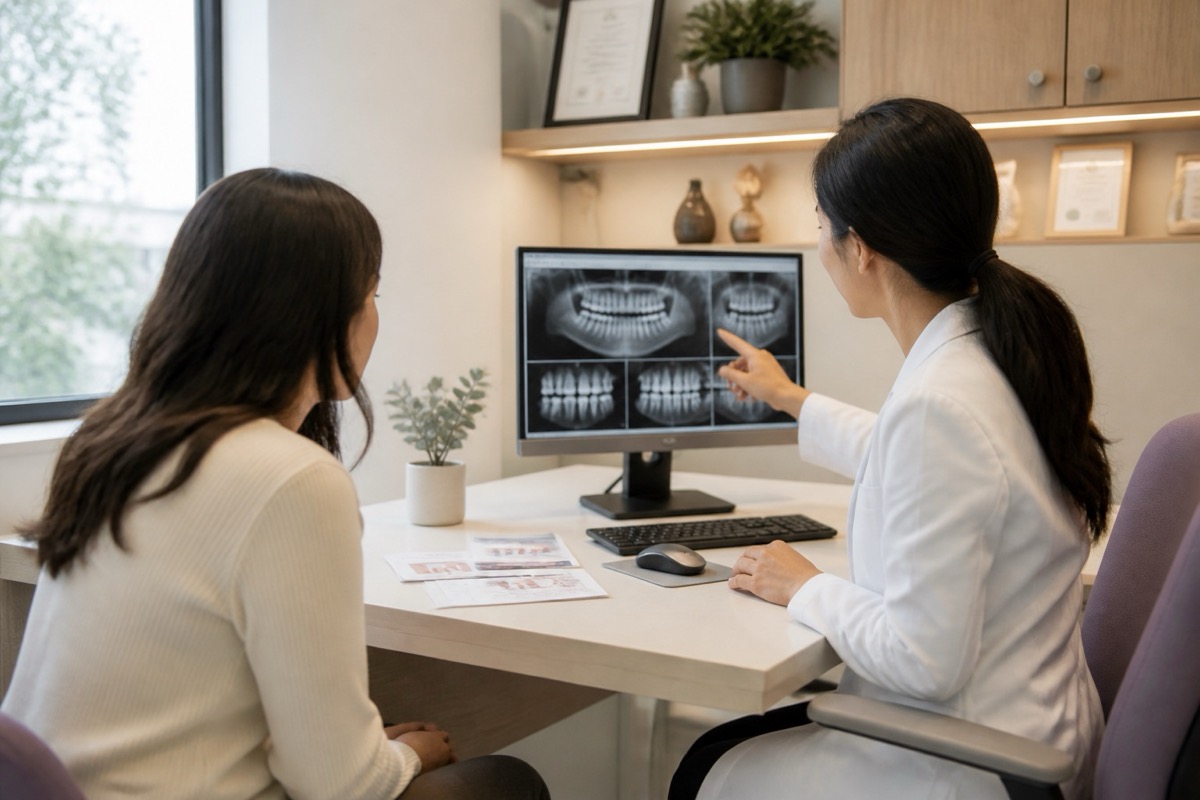
The next 20–30 minutes: comprehensive examination. I’ve written about this in detail in our check-up and clean guide, but the short version is: I check every tooth surface, probe every gum pocket, assess your bite and jaw joint, screen for oral cancer, and examine your existing dental work for signs of wear or breakdown. We take digital X-rays if clinically indicated — and for a new patient, they usually are, because we need to see what’s happening below the surface and between the teeth.
The last 15–20 minutes: findings and plan. This is where the time investment pays off. Instead of a rushed summary and a printout of item numbers, I sit down with you and explain everything in plain language:
- What’s healthy and stable — and yes, we always tell you the good news too
- What needs attention now, and why
- What we’re going to monitor over time
- What the options are for each finding, including costs
If you have private health insurance, we check your benefits on the spot. You’ll know your out-of-pocket before you agree to anything.
Why “prevention-first” isn’t just a slogan
Every practice says they focus on prevention. What does that actually mean in practice?
For us, it means the first visit is built around understanding your risk factors — not just treating what’s already broken. Two people can have the same number of fillings but completely different risk profiles. One might have had those fillings placed twenty years ago and maintained stable oral health since. The other might have had them placed in the last two years, suggesting an active problem that needs investigation.
Prevention-first means asking: why did this happen, and what can we change so it doesn’t keep happening?
That might be a conversation about diet — not a lecture, but an honest discussion about what you’re eating and drinking that might be contributing. It might be a change to your brushing technique, a different toothpaste, or a shorter recall interval so we can keep a closer eye on things. For children, it might mean fissure sealants on newly erupted molars or a chat about what’s in the sports bottle at Saturday footy (I’ve written about that too).
The point is: if we only treat what’s broken without addressing why it broke, we’re just resetting the clock until the next problem.
The value of getting it right the first time
There’s a real cost to rushing a first visit. Not just financially — though catching a small cavity early is always cheaper than a root canal and crown later — but in terms of trust.
When a dentist takes the time to explain what they see, show you the X-rays, and let you ask questions without feeling rushed, something shifts. You understand your own mouth. You know what to watch for. You’re making informed decisions, not just nodding along because someone in a white coat told you to.
That’s what we’re building at the first visit: a foundation. Not just a clinical baseline, but a relationship where you feel comfortable asking “do I really need that?” or “can we wait and watch this one?” — and getting an honest answer.
What to bring
To get the most from your first appointment:
- Your Medicare card — especially if you have children who may be eligible for the Child Dental Benefits Schedule
- Health fund details — your card or the app on your phone
- A list of current medications and supplements — including anything over-the-counter you take regularly
- Any X-rays or records from a previous dentist — we can request these on your behalf if you’d prefer
- Your questions — genuinely, write them down. There are no silly questions, and having them written means you won’t forget in the moment
Arrive a few minutes early so we can sort the paperwork without cutting into your appointment time.
A note about languages
Our team speaks English, Mandarin, Teochew, and Shanghainese. In a community where nearly one in five households speaks a Chinese language at home, being able to discuss your dental care in your preferred language isn’t a bonus — it’s how we make sure you fully understand your options and feel confident in your decisions. Let us know when you book if you’d prefer a particular language.
If you’ve been meaning to find a new dentist, or it’s been a while and you’re not sure where to start, the first visit is designed to make that easy. No pressure, no judgement — just a thorough look at where things stand.
We’re at 129A Canterbury Road, Blackburn — a short walk from Blackburn Station. You can book online or call us on (03) 8838 8820.